
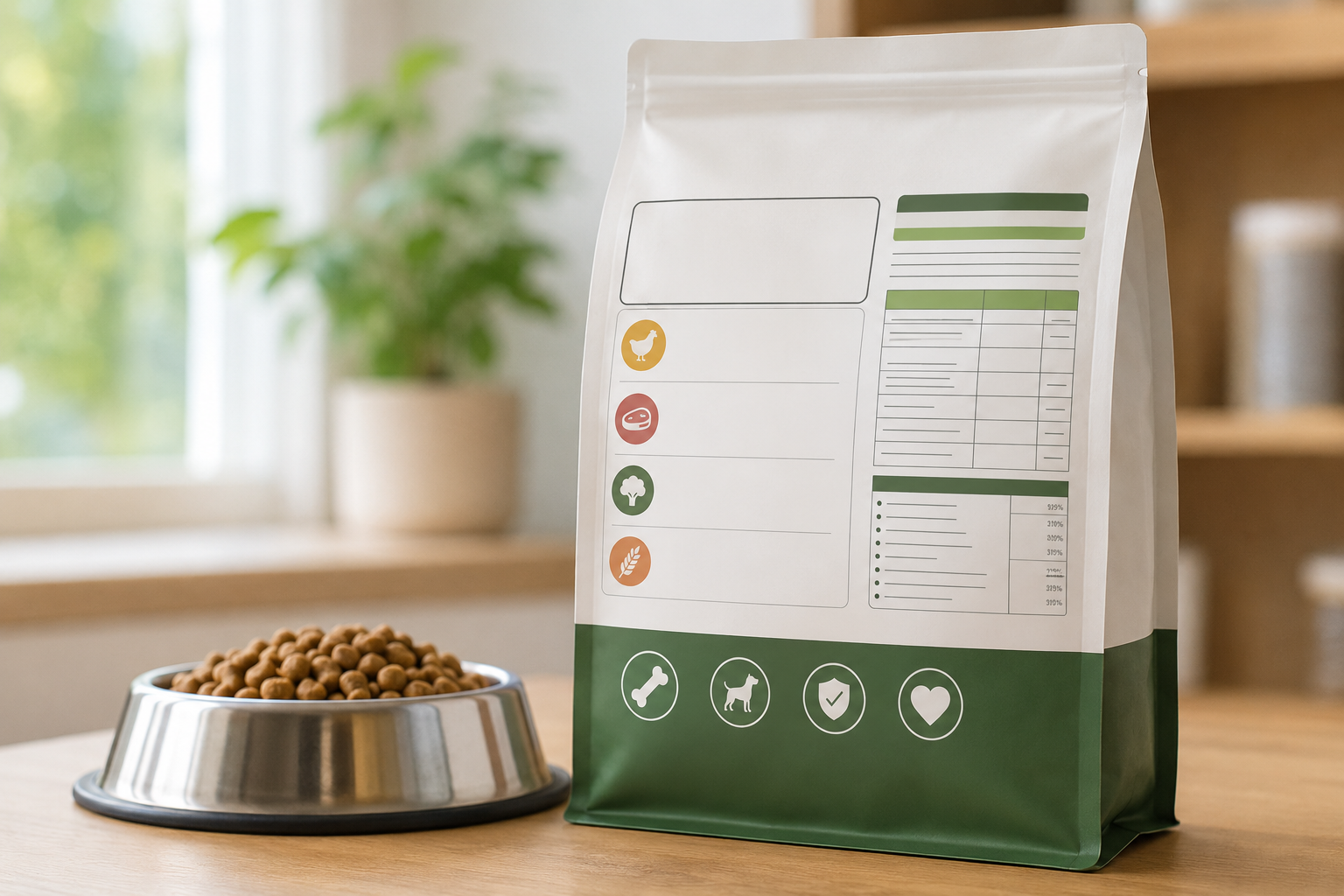
Picking up a bag of dog food can feel surprisingly complicated. There are ingredient lists, guaranteed analysis tables, nutritional claims, feeding instructions and words such as “natural,” “premium” or “complete nutrition” competing for your attention.
But what actually matters?
If you want to know how to choose dog food, the best place to start is not the front of the package. Turn it around and read the label.
The ingredient list can tell you what goes into your dog’s food, while the nutritional information helps you understand whether the food is appropriate for your pet’s needs. Learning to read both can make everyday food choices much easier.
Why Reading a Dog Food Label Matters
A dog food label provides important information about the food’s ingredients, nutritional composition and intended use.
The ingredient list is generally arranged by weight before processing. This means ingredients appearing near the beginning make up a larger proportion of the formula than those listed later.
However, simply choosing the food with the first ingredient you recognize is not enough.
A good decision involves looking at the entire formula, your dog’s age, size, activity level and individual dietary needs.
How to Choose Dog Food by Looking at the Ingredient List
When learning how to choose dog food, start with these five areas.
1. Look for Clearly Identified Protein Sources
Protein is an important part of a dog’s diet. It contributes to maintaining muscles and supports many normal body functions.
Look for clearly identified animal protein sources such as chicken, turkey, fish, lamb or other named meats when these are appropriate for your dog.
You may also see ingredients described as meat meals. A named meal can be a concentrated source of protein because much of the water has already been removed.
The important point is to understand what the ingredient actually represents rather than judging it solely by the word “meal.”
2. Understand Animal Fats
Fats provide concentrated energy and can contribute to skin and coat health.
When examining dog food ingredients, look for clearly identified fat sources where possible. Ingredients such as chicken fat or fish oil provide more information than vague descriptions.
Fish oils may also provide omega fatty acids, which are commonly included in pet diets for their nutritional value.
3. Do Not Automatically Avoid Grains
One of the most common misconceptions about dog food is that grains are automatically unhealthy.
That is not necessarily the case.
Ingredients such as rice, oats, barley and other grains can provide carbohydrates and other nutrients. Whether a grain containing food is suitable depends on the individual dog and the overall nutritional formulation.
A grain free label does not automatically mean the food is better.
Instead of focusing on marketing claims, consider the complete ingredient profile and whether the diet meets your dog’s nutritional requirements.
4. Check Fruits and Vegetables in Context
Some formulas contain vegetables, fruits, legumes or other plant ingredients.
These can contribute nutrients, fibre and other components to the diet. However, seeing a long list of vegetables does not automatically make a dog food superior.
Look at the overall formula rather than treating one ingredient as the deciding factor.
5. Pay Attention to Added Nutrients
Vitamins, minerals, amino acids and other nutritional components may be added to help create a complete diet.
These ingredients can look unfamiliar, but unfamiliar does not automatically mean harmful.
For example, some nutritional supplements and mineral sources may have technical names that are difficult for an average pet parent to recognize.
The better question is whether the finished food provides appropriate and balanced nutrition for your dog.
What About the Guaranteed Analysis?
The guaranteed analysis is another important section of a dog food label.
It commonly provides information about nutrients such as:
- Crude protein
- Crude fat
- Crude fibre
- Moisture
These numbers can help you compare products, but they should not be interpreted in isolation.
For example, comparing the protein percentage of a dry food with a wet food directly can be misleading because wet food contains considerably more moisture.
If you are comparing different types of food, looking at nutrients on a dry matter basis can provide a more meaningful comparison.
Ingredients to Think About Carefully
There is no single ingredient list that is perfect for every dog. However, pet parents should be cautious about making decisions based purely on emotional reactions to unfamiliar ingredient names.
Some ingredients may have technical names because they serve a nutritional purpose.
Similarly, a food containing a recognizable ingredient is not automatically better simply because the ingredient sounds more appealing.
Instead, ask:
- Is the ingredient clearly identified?
- What nutritional role does it serve?
- Is the overall diet appropriate for my dog?
- Does the food suit my dog’s life stage?
- Does my dog actually tolerate the formula well?
This approach is much more useful than trying to create a simple “good ingredient” and “bad ingredient” list.
How to Read the Order of Dog Food Ingredients
The order of ingredients can provide useful clues.
Ingredients are generally listed according to their weight before processing. However, moisture levels can influence where ingredients appear on the list.
For example, fresh meat contains a significant amount of water. A dry ingredient may therefore contribute differently to the finished food than its position on the ingredient list initially suggests.
This is why experienced pet parents look beyond the first ingredient.
Instead, evaluate the complete recipe and nutritional information together.
Look Beyond Marketing Claims
Words on the front of a package are designed to attract attention.
You might see phrases such as:
- Premium
- Natural
- High protein
- Grain free
- Holistic
- Real meat
- No artificial ingredients
These claims can be useful, but they should not replace reading the actual label.
When choosing food, turn the package around and investigate what is actually inside.
The best dog food ingredients are not simply the ingredients that sound impressive. They are ingredients that form part of a nutritionally appropriate formula for your particular dog.
Consider Your Dog’s Individual Needs
There is no universal answer to the question of which dog food is best.
A puppy has different nutritional requirements from an adult dog. A highly active dog may have different energy requirements from a less active companion.
Age, size, activity level and individual sensitivities can all influence food choices.
If your dog has persistent digestive problems, food reactions, unexplained weight changes or another dietary concern, speak with a veterinarian before making major changes to the diet.
A Simple Dog Food Label Checklist
The next time you are standing in a pet store comparing two bags, use this quick checklist.
Step 1: Check whether the food is intended for your dog’s life stage.
Step 2: Read the complete ingredient list rather than focusing only on the first ingredient.
Step 3: Identify the main protein sources.
Step 4: Look at the sources of fat and carbohydrates.
Step 5: Review the guaranteed analysis.
Step 6: Consider your dog’s activity level and individual requirements.
Step 7: Do not assume that expensive automatically means better.
Step 8: Do not judge an ingredient simply because its name sounds unfamiliar.
Step 9: Compare complete formulas rather than individual ingredients.
Step 10: Introduce dietary changes gradually whenever possible.
Frequently Asked Questions
How do I know if dog food is good quality?
Look beyond the front of the package. Examine the complete ingredient list, nutritional information, intended life stage and overall formulation. The food should be appropriate for your dog’s specific nutritional needs.
What ingredients should I look for in dog food?
Look for clearly identified protein sources, appropriate fat sources, carbohydrates and other ingredients that contribute to a balanced nutritional profile. The ideal formula depends on your dog’s individual requirements.
Should the first ingredient in dog food always be meat?
Not necessarily. The first ingredient is important, but it should not be the only factor you consider. Ingredient order, moisture content, the complete formula and nutritional adequacy all matter.
Are grains bad for dogs?
Grains are not automatically bad for dogs. Ingredients such as rice, oats and barley can provide useful nutrients. Whether a particular diet is suitable depends on the individual dog and the complete nutritional formulation.
Is grain free dog food better?
Not automatically. Grain free does not mean nutritionally superior. The appropriate choice depends on your dog’s nutritional requirements and individual circumstances.
Should I avoid ingredients with unfamiliar names?
Not necessarily. Many legitimate nutritional ingredients have technical names. Instead of judging an ingredient by its name alone, understand its role within the complete formula.
How often should I change my dog’s food?
There is no universal schedule requiring regular food changes. If your dog is doing well on a nutritionally appropriate diet, frequent changes may not be necessary. Any significant dietary change should generally be introduced gradually.
The Bottom Line
Learning how to choose dog food does not require becoming a pet nutrition expert overnight.
Start by turning the package around. Read the ingredient list, understand the guaranteed analysis, look beyond marketing claims and consider your dog’s age, lifestyle and individual needs.
Most importantly, do not let one ingredient determine your entire decision.
A thoughtful choice comes from looking at the complete dog food label, understanding the dog food ingredients and selecting a formula that provides appropriate nutrition for your pet.
When you approach food shopping this way, choosing between different formulas becomes much less confusing and much more informed.