
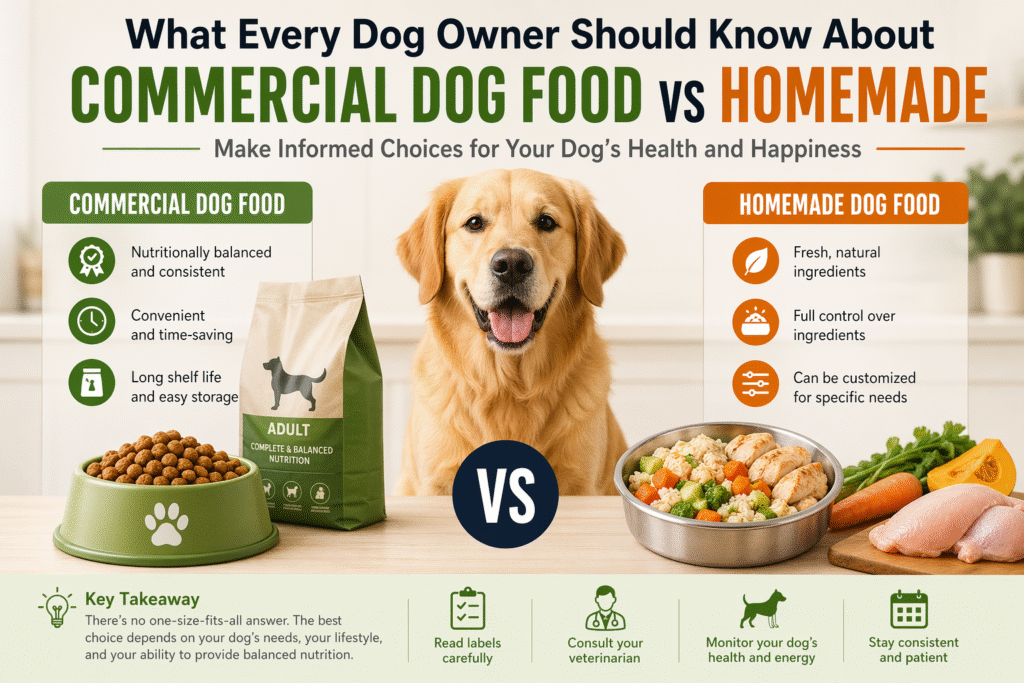
If you have ever stood in a pet store aisle or scrolled through endless feeding advice online, you already know how overwhelming it can get. One source praises packaged meals for convenience, while another insists homemade diets are the only way to ensure quality. Somewhere in between, your dog is depending on you to make the right choice.
This confusion is exactly why dog food awareness matters more today than ever before. What you feed your dog is not just about filling a bowl, it directly shapes their energy levels, digestion, coat health, immunity, and even lifespan.
Let’s break this down in a way that actually helps you make a confident and informed decision.
Understanding the Basics of Dog Nutrition
Before comparing options, it helps to understand what your dog truly needs.
Dogs require a balanced mix of protein, fats, carbohydrates, vitamins, and minerals. This balance is not optional. It is essential. Even small deficiencies over time can lead to noticeable health issues.
A simple way to think about it
Protein supports muscle and tissue repair
Fats provide energy and support skin health
Carbohydrates fuel daily activity
Micronutrients support immunity and organ function
This is where the real debate around commercial dog food vs homemade begins. Which option delivers this balance more reliably?
What Is Commercial Dog Food Really Made Of
Commercial dog food is designed to provide complete and balanced nutrition. Most reputable brands follow established nutritional standards and undergo testing to ensure consistency.
Benefits of Commercial Dog Food
Convenience that fits real life
You do not have to plan, measure, or cook daily meals. This is especially helpful for busy pet parents.
Nutritional consistency
Each serving is formulated to meet specific dietary requirements. This reduces the risk of nutrient gaps.
Long shelf life
Storage is easy and food remains usable for longer periods.
Common Concerns
Ingredient quality varies
Not all brands are equal. Some use fillers or low quality protein sources.
Lack of transparency
Labels can sometimes be confusing or misleading.
Processing impact
Highly processed foods may lose some natural nutrients during production.
This is why dog food awareness becomes critical. Reading labels and understanding ingredients is no longer optional.
The Reality of Homemade Dog Food
Homemade diets are often seen as the healthier and more natural choice. While this can be true, it depends heavily on how the food is prepared.
Benefits of Homemade Diets
Control over ingredients
You know exactly what goes into your dog’s bowl.
Freshness and quality
Meals are typically free from preservatives and artificial additives.
Customization
You can tailor meals based on your dog’s specific needs, allergies, or preferences.
Challenges You Should Not Ignore
Nutritional imbalance risk
This is the biggest issue. Without proper knowledge, it is easy to miss essential nutrients.
Time and effort
Preparing balanced meals regularly requires planning and consistency.
Cost factor
High quality ingredients can make homemade diets more expensive than expected.
When comparing commercial dog food vs homemade, this is where many pet owners unknowingly make mistakes. Good intentions do not always translate into balanced nutrition.
A Clear Comparison That Actually Helps
Nutritional Balance
Commercial food offers scientifically measured nutrition
Homemade food depends entirely on your knowledge and planning
Convenience
Commercial food is ready to serve
Homemade requires daily preparation
Ingredient Transparency
Homemade gives full control
Commercial requires careful label reading
Cost
Commercial can be more economical
Homemade can become expensive depending on ingredients
Flexibility
Homemade allows customization
Commercial offers limited variation within product lines
What Most Dog Owners Overlook
Many people assume that homemade food automatically means healthier food. That is not always true.
A poorly planned homemade diet can lead to
Calcium deficiency
Vitamin imbalance
Digestive issues
Low energy levels
At the same time, blindly trusting packaged food without checking ingredients can also lead to long term health concerns.
This is why dog health tips often emphasize one core idea
Balance matters more than the source of food.
How to Make the Right Choice for Your Dog
There is no single answer that fits every dog. The right choice depends on your lifestyle, your dog’s health, and your ability to maintain consistency.
Choose Commercial Food If
You need convenience without compromising basic nutrition
You can invest time in selecting high quality brands
You want predictable and consistent feeding
Choose Homemade Food If
You are willing to research proper nutrition
You can maintain a consistent meal plan
You want complete control over ingredients
Consider a Hybrid Approach
Many experienced pet owners combine both approaches. For example
Using high quality commercial food as a base
Adding fresh, home cooked ingredients occasionally
This approach can offer both balance and flexibility when done correctly.
Practical Dog Health Tips You Can Start Today
No matter which route you choose, these simple practices can improve your dog’s health significantly
Read ingredient labels carefully
Look for real protein sources instead of vague terms
Avoid sudden diet changes
Always transition gradually to prevent digestive issues
Monitor your dog’s response
Energy levels, coat condition, and digestion tell you a lot
Consult a veterinarian when needed
Especially before switching to a fully homemade diet
Stay consistent
Frequent changes in diet can do more harm than good
A Simple Definition Worth Remembering
Commercial dog food vs homemade is not about which is universally better. It is about which option provides complete, balanced, and sustainable nutrition for your specific dog.
That distinction is what truly matters.
Takeaway
Feeding your dog should not feel like a constant guessing game. Once you understand the fundamentals, the decision becomes much clearer.
Whether you choose commercial food, homemade meals, or a combination of both, the goal remains the same
A healthy, happy dog with consistent nutrition.
Building strong dog food awareness is the first step. From there, every small improvement you make in your dog’s diet adds up over time.
If you are ever unsure, start simple, stay consistent, and focus on balance. Your dog will show you the results in ways that matter most.