
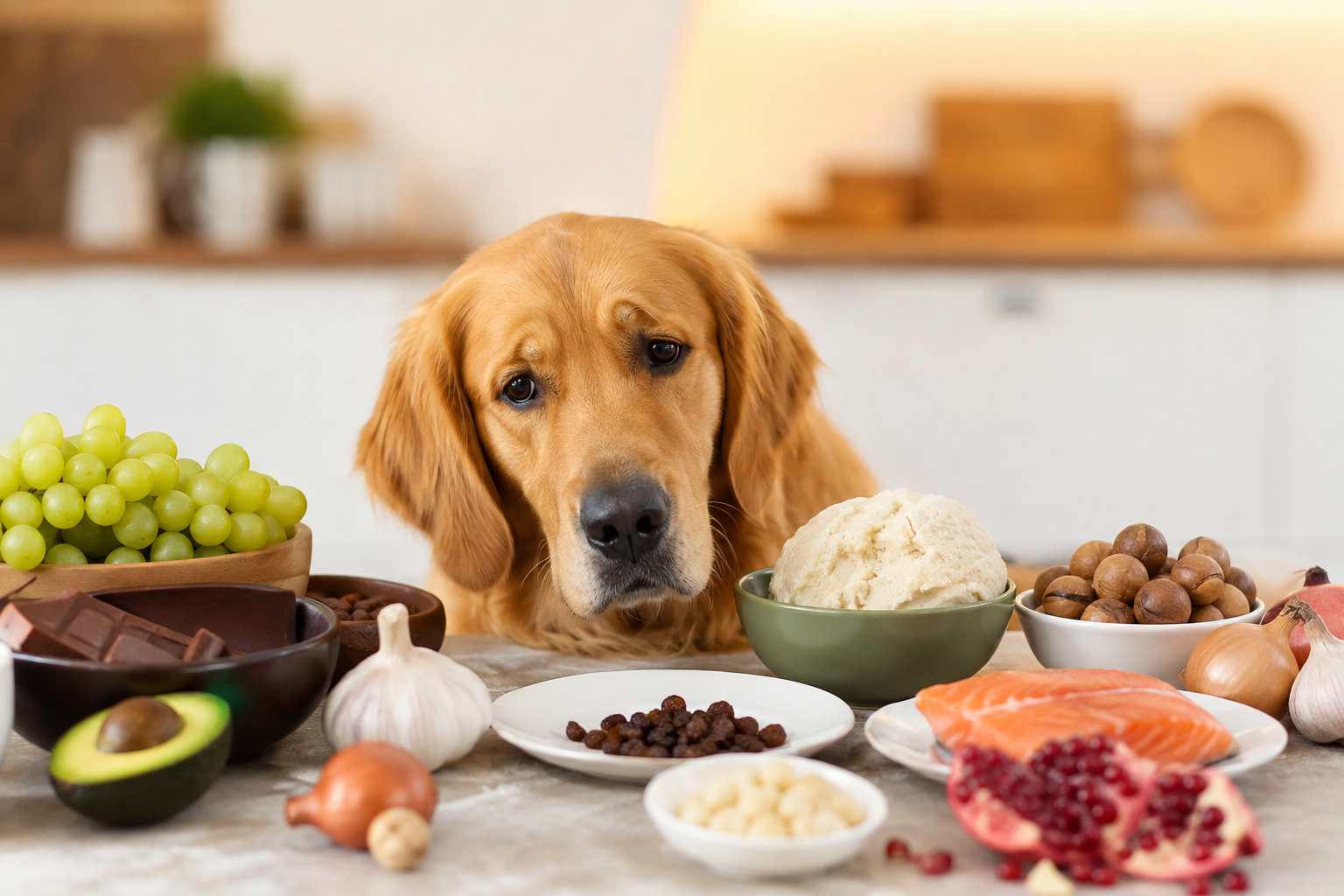
Dogs have a talent for finding food they shouldn’t have.
A dropped piece of chocolate. A few raisins from the kitchen counter. A spoonful of leftover curry. Half a sandwich containing sugar-free peanut butter. To a dog, these may look like harmless treats. To their body, some can be anything but harmless.
The problem is that foods dogs cannot eat aren’t always obvious. Some can cause stomach upset, while others can trigger low blood sugar, kidney injury, anemia, seizures, or other potentially life-threatening complications.
Knowing the difference matters—especially because some toxic foods can be found in everyday kitchens.
Here are 15 common household foods and ingredients that should stay away from your dog’s bowl.
15 Foods Toxic or Unsafe for Dogs
1. Chocolate
Chocolate is one of the most well-known poisonous foods for dogs, but it is still a common cause of accidental ingestion.
Chocolate contains theobromine and caffeine, compounds that dogs process differently from humans. Dark chocolate, baking chocolate, and cocoa powder generally contain higher concentrations than milk chocolate.
Depending on the amount and type consumed, chocolate can cause vomiting, diarrhea, restlessness, abnormal heart rhythms, tremors, seizures, and potentially life-threatening complications.
Keep away: chocolate bars, cocoa powder, brownies, baking chocolate, chocolate cake, and chocolate desserts.
2. Grapes and Raisins
Grapes and raisins can be particularly dangerous because there is no reliable way to predict which dog will develop a serious reaction.
In susceptible dogs, ingestion can lead to acute kidney injury and kidney failure. Vomiting or diarrhea may appear within several hours, while more serious kidney problems can develop later.
And don’t assume that a small amount is automatically safe.
Keep away: fresh grapes, raisins, raisin bread, trail mix containing raisins, and foods containing grape or raisin pieces.
3. Xylitol
Xylitol is one of the ingredients dog owners need to actively look for on food labels.
This sugar substitute can cause a rapid and severe drop in blood sugar in dogs. In some cases, it can also cause serious liver injury or failure. Signs can include vomiting, weakness, lack of coordination, seizures, and collapse.
Xylitol may appear in products marketed as sugar-free, including chewing gum, candies, baked goods, some nut butters, and other products.
Important: Never assume that peanut butter or another treat is dog-safe just because it isn’t chocolate. Check the ingredient list.
4. Onions
Onions can damage red blood cells in dogs and may eventually contribute to anemia.
The risk isn’t limited to raw onions. Dogs can be affected by raw, cooked, dehydrated, or powdered onion, with concentrated forms potentially posing a particular concern.
Watch for: onion powder in seasoning mixes, soups, gravies, sauces, instant foods, and leftovers.
5. Garlic
Garlic belongs to the same Allium family as onions and can also damage red blood cells.
Garlic is considered more toxic than onion on a weight-for-weight basis, and concentrated forms such as garlic powder can make accidental exposure easier than many owners realize.
That means a food doesn’t have to contain visible pieces of garlic to be a concern.
6. Macadamia Nuts
Macadamia nuts are specifically associated with poisoning in dogs.
After ingestion, dogs may develop weakness, vomiting, depression, lack of coordination, tremors, or an elevated body temperature. Signs commonly develop within several hours.
Keep away: macadamia nuts, cookies containing them, nut mixes, and desserts containing macadamia pieces.
7. Alcohol
Dogs should never be given alcoholic drinks.
Alcohol is absorbed quickly and can cause intoxication, depression of the nervous system, low body temperature, metabolic problems, coma, seizures, and, in severe cases, death.
Don’t forget that alcohol can also occur in food products.
Keep away: beer, wine, spirits, cocktails, alcoholic desserts, and any food containing significant amounts of alcohol.
8. Coffee and Other Caffeinated Products
Coffee isn’t just unsuitable for dogs—it can be dangerous.
Caffeine can cause hyperactivity, vomiting, abnormal heart rhythms, tremors, seizures, and other serious effects.
Keep away: coffee grounds, coffee beans, espresso, energy drinks, caffeinated tea, caffeine tablets, and products containing concentrated caffeine.
A spilled cup on the floor can be enough to create a problem for a curious dog.
9. Raw Yeast Bread Dough
Raw yeast dough presents a problem that many people don’t expect.
Once swallowed, the warm environment of a dog’s stomach can allow the dough to continue expanding. Yeast fermentation can also produce ethanol, creating an alcohol-toxicity risk. Severe cases can involve stomach distension, neurological depression, metabolic abnormalities, and potentially life-threatening complications.
Keep away: rising pizza dough, bread dough, dinner-roll dough, and homemade yeast dough.
10. Very Salty Foods
A tiny accidental taste is different from consuming a large quantity, but heavily salted foods should not be treated as dog treats.
Excessive salt intake can cause increased thirst and urination and, in significant exposures, neurological signs such as tremors and seizures.
Examples: salty chips, heavily salted snacks, instant soup mixes, salty gravies, and bouillon cubes.
11. High-Fat and Greasy Foods
Not every dangerous food has to be technically poisonous.
Very fatty foods can cause significant digestive upset and may contribute to pancreatitis in dogs.
That leftover fried food or greasy meat may seem like an innocent treat, but regularly sharing rich human food is a bad habit.
Avoid: fried foods, fatty meat trimmings, greasy leftovers, rich sauces, and very fatty desserts.
12. Cooked Bones
Bones aren’t necessarily “poisonous,” but that doesn’t make them safe.
Cooked bones can splinter and create choking, mouth, intestinal, or obstruction risks. Bone fragments can cause serious gastrointestinal injuries and may require veterinary intervention.
This is one reason giving a dog leftover cooked chicken or meat bones from the dinner table is a poor idea.
13. Raw Meat and Raw Eggs
Raw meat and eggs can carry bacteria such as Salmonella and E. coli, creating food-safety concerns for pets and the people handling their food.
The issue isn’t simply whether a dog “can digest raw food.” The source, handling, storage, preparation, and individual health of the dog all matter.
If you’re considering a raw diet, discuss it with a veterinarian rather than relying on scraps from your kitchen.
14. Avocado
Avocado is a more nuanced case than chocolate or xylitol.
Avocado is not among the highest-risk food toxins for dogs, but it can still create problems. The fruit is relatively high in fat, and eating the pit can create a potentially serious obstruction.
Keep away: guacamole, avocado pits, avocado-heavy leftovers, and dishes containing onion or garlic alongside avocado.
The last point matters because guacamole often contains ingredients that are much more concerning for dogs than avocado itself.
15. Nutmeg and Heavily Spiced Desserts
Nutmeg is easy to overlook because it appears in ordinary kitchen recipes.
Large amounts of nutmeg can cause vomiting, agitation, abnormal heart rate, difficulty walking, and neurological effects in animals.
The bigger everyday risk is often the finished dessert, which may contain multiple ingredients dogs shouldn’t eat—such as chocolate, xylitol, alcohol, or excessive fat.
So don’t let your dog sample cake batter, festive desserts, or heavily spiced baked goods simply because the ingredient list looks harmless at first glance.
What Should You Do If Your Dog Eats Something Toxic?
First, don’t panic—but don’t wait for symptoms either.
If you know or suspect your dog has eaten a potentially toxic food:
- Remove the remaining food so your dog cannot eat more.
- Identify exactly what was eaten.
- Estimate how much was consumed.
- Note when the ingestion happened.
- Keep the packaging or ingredient label if available.
- Contact your veterinarian promptly for advice.
Don’t try random home remedies or induce vomiting unless a veterinary professional specifically tells you to. The appropriate response can depend on the substance, amount, timing, and condition of the dog.
Some toxic exposures can cause serious internal damage before obvious symptoms appear. Xylitol, for example, can cause hypoglycemia rapidly, while liver injury may become apparent later.
What Symptoms Should Dog Owners Watch For?
Potential warning signs after eating something unsafe include:
- Vomiting or diarrhea
- Excessive thirst or urination
- Weakness or unusual tiredness
- Loss of coordination
- Restlessness or agitation
- Tremors
- Abdominal swelling or pain
- Difficulty breathing
- Seizures
- Collapse
- Changes in gum or eye color
The symptoms can vary dramatically depending on the food involved.
For example, grape or raisin exposure can progress to kidney injury, while xylitol can cause dangerously low blood sugar.
How to Prevent Food Poisoning in Dogs
The easiest poisoning incident to treat is the one that never happens.
A few simple household habits make a big difference:
- Store chocolate and sweets in closed cabinets.
- Keep grapes and raisins off accessible countertops.
- Read labels on sugar-free products.
- Don’t leave coffee cups within reach.
- Keep alcohol away from pets during parties.
- Keep rising dough out of the kitchen area where your dog can reach it.
- Don’t give table scraps without checking the ingredients.
- Keep garbage bins securely closed.
- Teach children not to feed the dog from their plates.
- Be especially careful during festivals, parties, and family gatherings when unfamiliar foods are everywhere.
The ASPCA reported that food and drink exposures represented 16.4% of its poison-control calls in 2025, with grapes, raisins, xylitol-containing products, onions, and garlic among the major food-related concerns.
FAQ: Foods Dogs Cannot Eat
What are the most toxic foods for dogs?
Some of the most important household food hazards include xylitol, chocolate, grapes and raisins, onions and garlic, macadamia nuts, alcohol, caffeine, and raw yeast dough. The seriousness of an exposure depends on the substance, amount consumed, and the individual dog.
Can dogs eat a small amount of chocolate?
Don’t intentionally give chocolate to a dog. The risk depends on the type and amount of chocolate as well as the dog’s size. Darker chocolate and cocoa products generally contain more of the compounds responsible for chocolate toxicity.
Can one grape hurt a dog?
Grapes and raisins should be treated seriously because individual susceptibility is unpredictable and kidney injury can occur. If your dog has eaten grapes or raisins, contact a veterinarian rather than waiting for symptoms.
Can dogs eat food containing onion or garlic?
It’s best to avoid giving dogs foods containing onion or garlic. Both can damage red blood cells, and concentrated forms such as powders can be particularly concerning.
What should I do if my dog eats xylitol?
Treat suspected xylitol ingestion as an urgent veterinary issue. Xylitol can cause severe hypoglycemia and, in some cases, liver injury. Do not wait for symptoms before seeking professional advice.
Are all human foods bad for dogs?
No. Many ordinary human foods can be appropriate for dogs when prepared safely and given in suitable portions. The important distinction is between dog-safe foods, foods that may cause digestive problems, and foods that can be genuinely toxic.
The Bottom Line
Dogs don’t need to share everything we eat.
The biggest mistake is assuming that a food is safe simply because humans eat it without a problem. Chocolate, grapes, xylitol, onions, garlic, macadamia nuts, alcohol, caffeine, and raw yeast dough are just some of the household foods that can put a dog at risk.
When in doubt, don’t experiment with your dog’s health. Keep questionable foods away, check the ingredients, and contact a veterinarian promptly if an accidental ingestion occurs.