
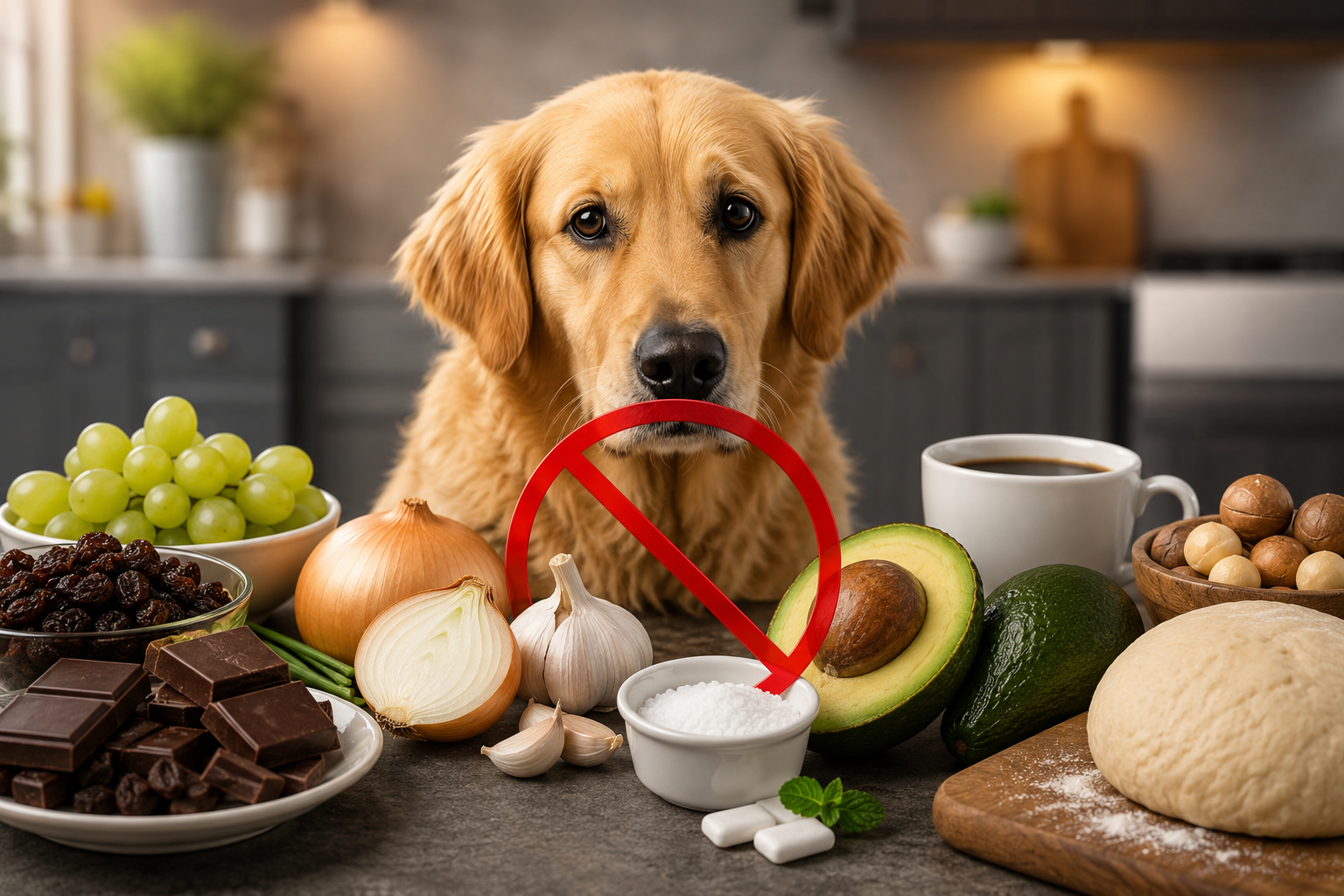
As pet parents, we often love sharing our meals with our furry companions. Those pleading eyes at the dinner table can be difficult to resist. However, many everyday foods that are perfectly safe for humans can pose serious health risks to dogs. Understanding toxic foods for dogs is one of the most important responsibilities of pet ownership.
Many cases of accidental poisoning happen at home because owners are unaware of the hidden dangers in common foods. Knowing which foods dogs cannot eat can help you avoid emergencies, reduce health risks, and ensure your dog enjoys a long and healthy life.
This guide explains the most common dangerous dog foods, warning signs of poisoning, and essential dog poisoning prevention strategies every pet owner should follow.
What Are Toxic Foods for Dogs?
Toxic foods for dogs are foods that contain substances a dog’s body cannot process safely. Even small amounts of certain foods can lead to digestive issues, organ damage, neurological problems, or in severe cases, death.
Understanding foods harmful to dogs is an important part of responsible pet ownership and supports better pet nutrition awareness.
Chocolate
Chocolate is one of the most well known dangerous dog foods. It contains theobromine and caffeine, both of which are toxic to dogs.
Why It Is Dangerous
Dogs metabolize theobromine much more slowly than humans. Even small quantities can cause poisoning.
Symptoms
- Vomiting
- Diarrhea
- Rapid heart rate
- Restlessness
- Tremors
- Seizures
Dark chocolate and baking chocolate contain higher concentrations and are particularly dangerous.
Grapes and Raisins
Many pet owners are surprised to learn that grapes and raisins are among the most serious foods dogs cannot eat.
Why They Are Dangerous
Even small amounts can cause sudden kidney failure in some dogs. The exact toxic compound is still not fully understood.
Symptoms
- Vomiting
- Loss of appetite
- Lethargy
- Increased thirst
- Reduced urination
Immediate veterinary attention is essential.
Onions, Garlic, and Chives
These common kitchen ingredients can damage a dog’s red blood cells.
Why They Are Dangerous
Whether raw, cooked, powdered, or dehydrated, onions and garlic can lead to anemia.
Symptoms
- Weakness
- Pale gums
- Fatigue
- Increased heart rate
- Reduced appetite
These ingredients are often hidden in sauces, soups, and processed foods, making them common contributors to accidental poisoning.
Xylitol
Xylitol is an artificial sweetener commonly found in sugar free gum, candies, peanut butter, baked goods, and dental products.
Why It Is Dangerous
Xylitol can cause a rapid release of insulin in dogs, leading to dangerously low blood sugar levels.
Symptoms
- Vomiting
- Weakness
- Loss of coordination
- Seizures
- Liver failure
Because symptoms can appear quickly, xylitol exposure is considered a veterinary emergency.
Alcohol
Alcohol is highly toxic to dogs and should never be intentionally offered.
Why It Is Dangerous
Even small quantities can affect the nervous system and internal organs.
Symptoms
- Vomiting
- Difficulty breathing
- Disorientation
- Low body temperature
- Coma
Proper dog poisoning prevention includes keeping alcoholic beverages out of reach during gatherings and celebrations.
Avocado
Avocados contain persin, a naturally occurring toxin that may cause health issues in some dogs.
Potential Risks
While small amounts of avocado flesh may not affect every dog, the pit, skin, and leaves can be problematic.
Symptoms
- Vomiting
- Diarrhea
- Stomach discomfort
The pit also presents a choking hazard.
Macadamia Nuts
Macadamia nuts are among the lesser known but highly dangerous dog foods.
Symptoms
- Weakness
- Tremors
- Fever
- Difficulty walking
- Depression
Symptoms often develop within hours of ingestion and may require veterinary care.
Caffeine
Coffee, tea, energy drinks, and certain supplements contain caffeine, which can be toxic to dogs.
Symptoms
- Hyperactivity
- Rapid heartbeat
- Tremors
- Restlessness
- Seizures
Pet owners should keep all caffeinated products securely stored.
Dairy Products
Although not technically toxic for every dog, many dogs struggle to digest lactose.
Possible Effects
- Gas
- Diarrhea
- Stomach upset
Moderation and individual tolerance should always be considered when feeding dairy products.
Raw Dough Containing Yeast
Raw bread dough may continue expanding inside a dog’s stomach.
Risks
- Bloating
- Abdominal pain
- Alcohol production during fermentation
This combination can become life threatening and requires immediate veterinary care.
Signs Your Dog May Have Eaten Toxic Food
Recognizing poisoning symptoms early can save your dog’s life. Every pet emergency guide should include awareness of the following warning signs:
- Vomiting
- Diarrhea
- Excessive drooling
- Tremors
- Difficulty breathing
- Loss of coordination
- Seizures
- Weakness
- Sudden behavioral changes
If you suspect your dog has consumed any of these foods harmful to dogs, contact a veterinarian immediately.
Dog Poisoning Prevention Tips
Preventing accidental exposure is far easier than treating poisoning. These practical dog safety tips can significantly reduce risk.
Store Food Securely
Keep toxic foods in sealed containers and cabinets that dogs cannot access.
Educate Family Members
Children and guests may unknowingly share unsafe foods. Ensure everyone understands which foods dogs cannot eat.
Read Ingredient Labels
Many products contain hidden ingredients such as onion powder, garlic powder, or xylitol.
Use Pet Safe Treats
Choose treats formulated specifically for dogs rather than offering table scraps.
Supervise Gatherings
Holidays and parties often increase the risk of exposure to dangerous dog foods.
Keep Emergency Contacts Accessible
Maintain your veterinarian’s contact information in an easily accessible location as part of your pet emergency guide.
Building Better Pet Nutrition Awareness
Good nutrition plays a major role in long term canine health. Developing strong pet nutrition awareness helps pet owners make safer food choices and avoid accidental poisoning.
A balanced canine diet should focus on foods specifically designed for dogs, while avoiding human foods that may contain toxic ingredients. Regular veterinary consultations can help you determine the best nutritional plan based on your dog’s breed, age, weight, and activity level.
Following reliable dog health tips and maintaining awareness of harmful ingredients contributes significantly to your pet’s overall wellbeing.
Dog Care Guide: When to Contact a Veterinarian
If your dog consumes a potentially toxic food, do not wait for symptoms to appear. Many toxins begin affecting internal organs before visible signs develop.
Your veterinarian may recommend:
- Monitoring at home
- Immediate examination
- Induced vomiting
- Blood tests
- Supportive treatment
Prompt action is one of the most effective forms of dog poisoning prevention.
TakeAway
Understanding toxic foods for dogs is essential for every responsible pet owner. From chocolate and grapes to xylitol and onions, many everyday foods can pose serious health risks. Knowing which foods dogs cannot eat, recognizing symptoms early, and following practical dog safety tips can help prevent emergencies and protect your dog’s health.
By increasing pet nutrition awareness, following trusted dog health tips, and keeping a reliable dog care guide on hand, you can create a safer environment for your furry companion and reduce the risk of accidental poisoning. Your vigilance today can make a lasting difference in your dog’s health and happiness.