
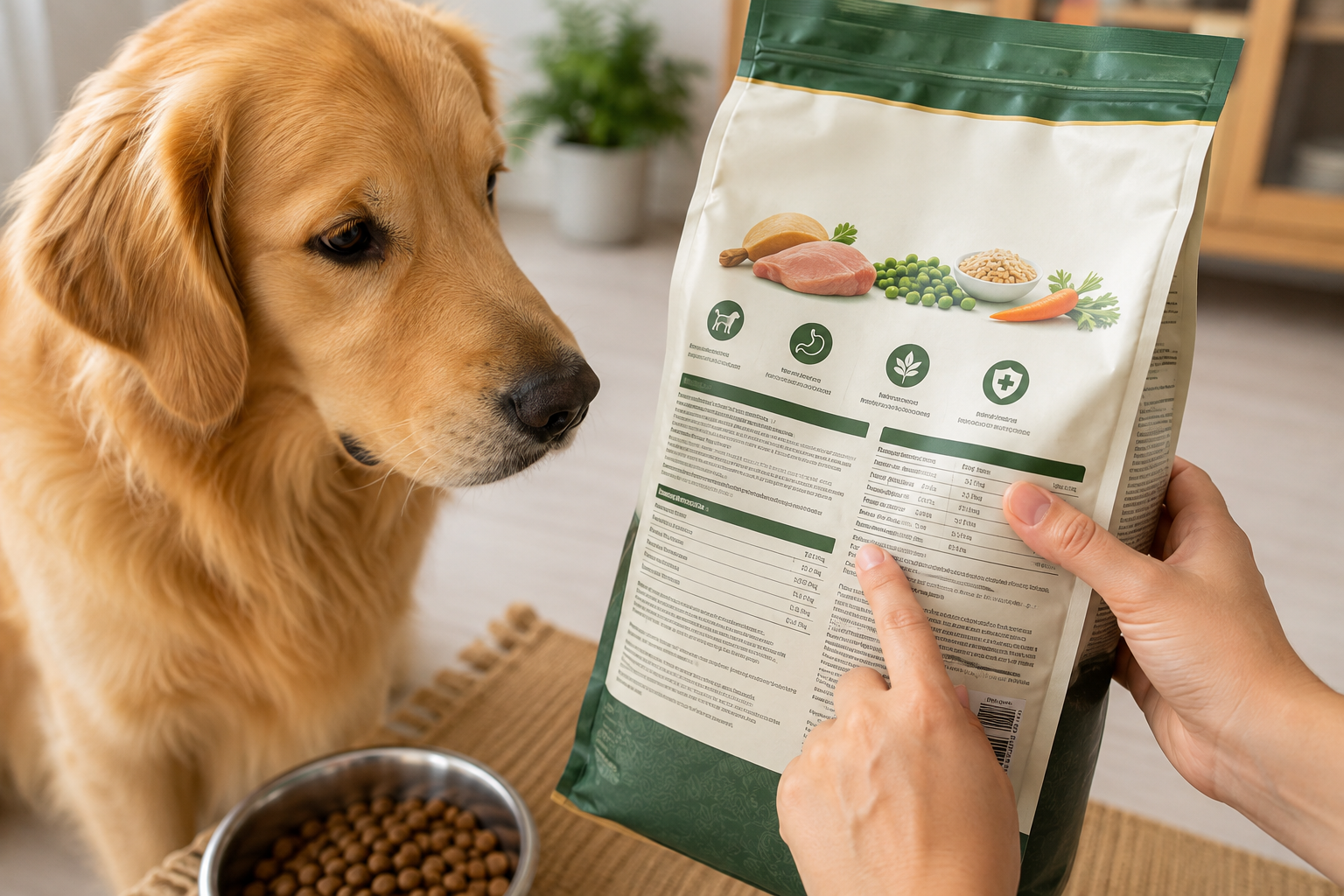
Walk into any pet store or browse online, and you’ll find countless bags and boxes claiming to offer the best nutrition for your dog. Labels proudly display words like “natural,” “premium,” “grain free,” and “high protein.” While these terms may sound reassuring, they do not always tell the complete story.
Many pet parents unknowingly choose food based on attractive packaging rather than what is actually inside. The truth is that understanding dog food labels is one of the most valuable skills you can develop as a responsible pet owner. Once you know what to look for, choosing healthy dog food becomes much easier.
This guide explains how to decode dog food ingredients, identify quality nutrition, and avoid common marketing traps so you can make informed decisions for your dog’s long term health.
What Are Dog Food Labels?
A dog food label provides important information about the product’s nutritional value, ingredients, feeding recommendations, and manufacturing standards.
Rather than focusing only on the front of the package, always read the back label carefully. This is where you’ll find the information that truly matters.
A typical label includes:
- Ingredient list
- Guaranteed analysis
- Feeding guidelines
- Nutritional adequacy statement
- Manufacturer information
- Storage instructions
Understanding each section helps you evaluate whether a product supports proper pet nutrition.
Start with the Ingredient List
The ingredient list tells you exactly what goes into your dog’s food.
Ingredients are listed in descending order by weight before cooking.
That means the first few ingredients contribute the largest portion of the recipe.
Look for Named Animal Proteins
Quality foods usually begin with clearly identified protein sources such as:
- Chicken
- Turkey
- Lamb
- Fish
- Eggs
Named proteins provide clarity about what your dog is eating.
Instead of vague terms like “meat meal” or “animal derivatives,” specific ingredients indicate greater transparency.
Understand Fresh Meat vs Meat Meal
One of the biggest misconceptions about dog food ingredients involves meat meal.
Fresh meat contains significant water. During processing, much of this moisture disappears.
Meat meal has already had water removed, making it a concentrated source of protein.
Neither ingredient is automatically better. The overall recipe and ingredient quality matter more than a single component.
Learn to Identify Quality Carbohydrates
Dogs benefit from digestible carbohydrates that provide steady energy and fibre.
Healthy carbohydrate sources may include:
- Brown rice
- Oats
- Sweet potato
- Pumpkin
- Barley
These ingredients support digestion and help maintain balanced energy levels.
Healthy Fats Matter More Than You Think
Good fats support:
- Healthy skin
- A shiny coat
- Brain development
- Joint health
- Immune function
Look for ingredients such as:
- Fish oil
- Chicken fat
- Flaxseed
- Salmon oil
These provide essential fatty acids that contribute to balanced pet nutrition.
Watch Out for Artificial Preservatives in Dog Food
Preservatives help extend shelf life, but not all preservatives are created equal.
Natural Preservatives
Safer preservation methods often include:
- Mixed tocopherols
- Rosemary extract
- Vitamin C
- Vitamin E
Artificial Preservatives
Some pet owners prefer avoiding artificial preservatives, including:
- BHA
- BHT
- Ethoxyquin
Choosing natural dog food often means selecting recipes preserved with naturally sourced antioxidants instead.
Don’t Be Fooled by Marketing Terms
Many packaging claims have little nutritional significance.
Here are some examples.
Premium
There is no universal nutritional standard that defines “premium.”
Natural
Generally indicates ingredients originate from natural sources, but the recipe should still be evaluated carefully.
Holistic
This is primarily a marketing term and does not guarantee better nutrition.
Grain Free
Grain free does not automatically mean healthier.
Many dogs digest whole grains perfectly well unless advised otherwise by a veterinarian.
Always evaluate the complete ingredient profile instead of relying on front of pack claims.
Understanding the Guaranteed Analysis
The guaranteed analysis provides minimum or maximum nutrient levels.
Common values include:
- Crude protein
- Crude fat
- Crude fibre
- Moisture
Higher protein is not always better.
The ideal nutritional profile depends on factors such as:
- Age
- Breed
- Activity level
- Medical conditions
Balanced nutrition is always more important than chasing the highest numbers.
Check Whether the Food Is Complete and Balanced
One of the most important statements on the package is the nutritional adequacy declaration.
A complete and balanced food supplies all essential nutrients required for the intended life stage.
Puppies, adult dogs, and senior dogs all have different nutritional needs.
Choosing food designed for your dog’s life stage supports healthier growth, maintenance, and ageing.
Ingredient Splitting Can Be Misleading
Manufacturers sometimes divide similar ingredients into separate entries.
For example:
- Pea protein
- Pea flour
- Pea fibre
Individually, they appear lower on the list.
Combined, they may represent a much larger portion of the recipe.
This is why reading the entire ingredient list is essential rather than focusing only on the first ingredient.
Signs of High Quality Healthy Dog Food
When comparing products, look for recipes that include:
- Clearly named protein sources
- Whole food ingredients
- Natural sources of vitamins and minerals
- Healthy fats
- Limited unnecessary fillers
- Naturally preserved ingredients
These qualities generally indicate a stronger focus on balanced pet nutrition.
Common Red Flags on Dog Food Labels
Pay closer attention if you notice:
- Excessive artificial colours
- Unclear animal protein sources
- Large amounts of added sugars
- Numerous artificial preservatives
- Long ingredient lists filled with unfamiliar additives
A shorter, more transparent ingredient list often makes it easier to understand exactly what your dog is eating.
How to Compare Two Dog Foods
Instead of comparing only the front labels, evaluate:
- Protein source
- Ingredient quality
- Fat sources
- Preservatives
- Nutritional balance
- Suitability for your dog’s age and activity level
This approach provides a much clearer picture than marketing claims alone.
Frequently Asked Questions
How do I know if my dog’s food has good ingredients?
Look for clearly named protein sources, whole food ingredients, healthy fats, and natural preservatives while avoiding excessive artificial additives.
Is grain free always healthier?
No. Grain free diets are not automatically healthier. Many dogs digest whole grains well unless there is a medical reason to avoid them.
What are the safest preservatives in dog food?
Natural preservatives such as mixed tocopherols, rosemary extract, and Vitamin E are commonly preferred by pet owners looking for natural dog food options.
Should meat be the first ingredient?
In many quality recipes, yes. However, evaluating the complete ingredient list provides a more accurate assessment than looking at only the first ingredient.
Why is reading dog food labels important?
Reading dog food labels helps you understand ingredient quality, nutritional balance, and whether the food supports your dog’s overall health.
Final Thoughts
Understanding dog food labels may seem overwhelming at first, but it becomes much easier once you know what to look for. Instead of relying on attractive packaging or marketing buzzwords, focus on ingredient quality, balanced nutrition, and transparency.
Every dog is unique, and choosing the right food starts with making informed decisions based on the label rather than the advertisement. A little extra time spent reading dog food ingredients today can contribute to better health, improved energy, and a happier life for your companion tomorrow.
If you are exploring better nutrition options for your pet, start by carefully reviewing every label before making your next purchase. Your dog’s health deserves nothing less.